Reading Durres history in the city
Durres history begins with the ancient city of Epidamnos, whose foundation the municipality places at around 627 BC. Present-day Durrës stands over the ancient settlement. The name Dyrrachium belongs to the city's ancient story too, and appears in the subject of the Archaeological Museum's collection. Keep these names in mind when moving between the surviving buildings and the objects displayed in the museum.
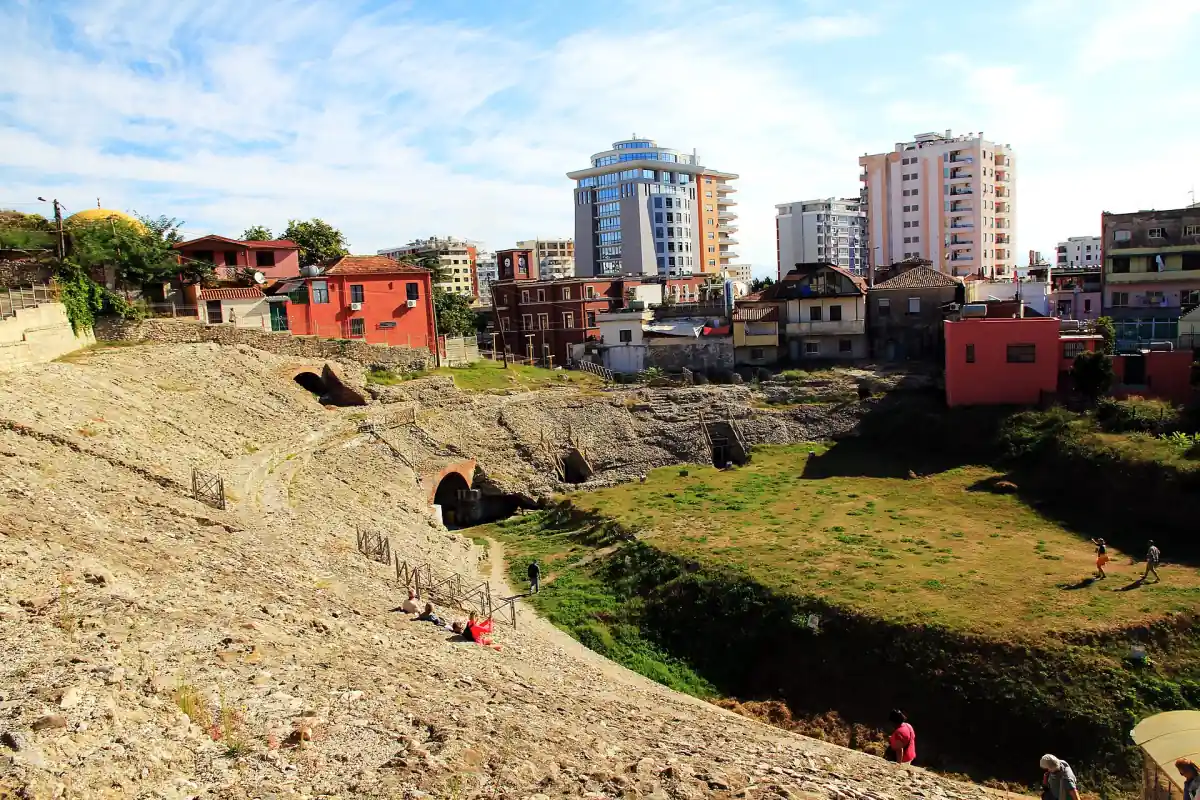
A useful way to approach the city is through its different architectural layers. The amphitheatre introduces the Roman period, the walls lead into Byzantine fortification, and the Venetian Tower adds another phase. Modern buildings stand around these remains. Look at each monument in its present surroundings, then place it within the wider sequence. This makes the history easier to follow than treating every old structure as part of the same period.
For the places to include in an actual city visit, use the sights and city walks guide. Here the emphasis is on how the surviving monuments relate to one another and how excavation, museums and restoration shape the history encountered today.

History on foot
This guided walk combines historical commentary with Albanian tastings.
Hand-picked tours, booked through GetYourGuide. Prices are indicative starting prices in euros (as of October 2026). Tap a tour for live availability and the current price in your currency.


Hear the city's story on a walk
The small-group city walk combines cultural and historical commentary with an English-speaking local guide and traditional Albanian tastings.
The Roman amphitheatre and its rediscovery
The amphitheatre was built at the beginning of the second century AD under Trajan, partly into a hillside. It provides a substantial piece of Roman architecture within the modern city. Consider the scale of the public building alongside the more personal objects in the museum, such as coins, sculptures and everyday items. Together they offer different ways of imagining ancient Dyrrachium.
A chapel with mosaics belongs to the site's later religious history. Excavation began in 1966 and initially continued until 1970. The monument therefore carries both ancient construction and a modern archaeological story. For practical arrangements, including how to pair the site with the collection, read the amphitheatre and Archaeological Museum guide.
Byzantine walls and the Venetian Tower
The municipality associates the visible Byzantine fortifications with Emperor Anastasius I, whose reign ran from 491 to 518. Later reinforcement took place under Justinian and during Venetian rule. This sequence matters when looking at the remaining walls: their story includes rebuilding and strengthening rather than a single construction moment.
The Venetian Tower is a fifteenth-century structure on a Byzantine foundation. It forms part of this defensive history. Restoration in 2022 and 2023 transformed it into an interpretation centre with virtual reality, an audio guide and dome projection. Treat the building's historic fabric and its modern interpretation as separate aspects of the same stop, and check current visiting arrangements if you want to enter.
The Byzantine Forum supplies another theme. It was a circular market and portico complex from the early sixth century. Its importance here is as an ancient urban space, alongside defences and public monuments. Keep that archaeological role in mind when fitting it into a walk through the present-day city.
Churches, collections and restoration
St Lucia's Catholic co-cathedral lies in the historic centre and was completed around 1868. The Orthodox Church of the Apostle Paul and Saint Astius belongs to a much more recent chapter: its foundation stone was laid in November 1994 and it was consecrated on 3 May 2009. These are distinct buildings with different histories. Plan any interior visits around the arrangements in place when you arrive.
The Archaeological Museum was founded in 1951 and reopened on 28 April 2026 after restoration following the earthquake damage of 2019. Its collection includes grave stelae, sarcophagi, sculpture, coins and everyday objects from the ancient city and its surroundings. The restored Ethnographic Museum, associated with the Moisiu house, was reported open to visitors on 24 June 2026. Museums add a history of collecting and preservation to the chronology of the monuments themselves.
If these cultural stops are the focus of your stay, compare a central base with the coastal districts in the accommodation guide. Leave time between named sites to notice how the surviving structures sit within today's streets.
Questions about the city's past
What was Durrës called in antiquity?
Epidamnos and Dyrrachium are names associated with the ancient city. The municipality dates the foundation of Epidamnos to around 627 BC.
Is the Venetian Tower part of the fortifications?
Yes. The fifteenth-century tower stands on a Byzantine foundation and belongs to the city's defensive remains.
Is the Orthodox church an ancient building?
The Church of the Apostle Paul and Saint Astius is modern. Its foundation stone was laid in November 1994 and its consecration took place on 3 May 2009.
What does the featured walk add?
It offers cultural and historical commentary, an English-speaking local guide and traditional Albanian tastings. For museum admission, choose an option with the relevant ticket explicitly included.